That second sixty is the number that annoys me. Not because the lab overcharged. Because the paper sat in a drawer. A test you do nothing with is not protection. It is a receipt.
I worked for a county water utility for 31 years reading other people’s results, and spent the last ten years drilling and servicing private wells where the homeowner is the whole water department. The pattern is the same everywhere. People either test nothing and hope, or they test everything once and freeze. Both leave you drinking whatever the aquifer felt like giving you this season. The middle path is boring and cheap: a few strips on a shelf, a lab bottle when it matters, and a household log that tells you what changed.
A shelf of strips by the door
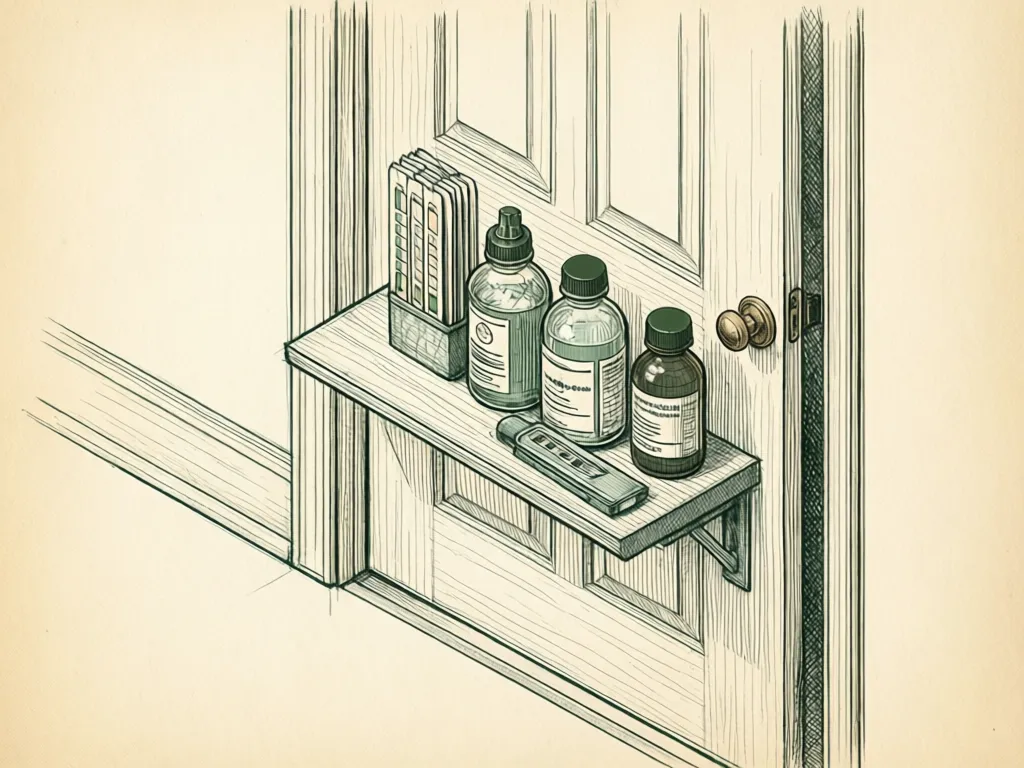
Test before you treat. That is the whole order of operations. On my back door there is a shelf with strips for testing chlorine, hardness and pH, and a case for the lab bottles from the county. The strips answer the quick questions in a minute, standing at the sink. The lab bottle answers the one question that matters most, which is bacteria, and that one you cannot do on a shelf no matter what the kit at the feed store implies.
The strips are the smoke detector. The lab is the fire department. You want the cheap loud thing that goes off often and the slow serious thing you call when the loud thing says to. A strip that drifts from your baseline is not an emergency. It is a note in the log and a reason to pull a sample for the county. If you do not know what your baseline is yet, that is the first job, and it costs you a month of strips and a pencil.
If you have never thought through where your water actually comes from and what it touches on the way to the tap, how a residential well works is worth understanding before you spend anything, because half of testing is knowing which part of the system you are sampling.
The lab bottle in the case
Bacteria testing is the one I will not shortcut. A positive result is a maintenance event, not a catastrophe: shock the well, fix the entry point, retest. What it is not is a reason to install whatever treatment device someone is standing in your kitchen describing.
Here is where the report itself earns its keep. Ask the lab for the actual numbers, not just pass or fail. Write them in the log with the date. The value of a report is not the paper. It is the trend line. A well that tests clean for ten years and then shows coliform after a wet spring is telling you a story about your well cap or your casing seal, and you can only hear it if you wrote down the last ten chapters.
People were lining their wells with wood and wickerwork as far back as the Iron Age, and the Neolithic wells in Cyprus date to 7000–8,500 BC. A shaft driven through limestone around 8400 BC reached an aquifer at 8 metres, and the wood-lined wells at Kückhoven and Eythra and Ostrov go back past 5200 BC. The Book of Changes, a Western Zhou text, already had an entry on maintaining wells and protecting the water source. The point is not the archaeology. The point is that keeping a well has always been a chore you do on a schedule, like splitting wood. The modern version of the chore is a strip, a bottle and a notebook. We got off easy.
On that March call, the well had run fine for twenty years. The owners had never tested it because it had never given them a reason. That spring it tested positive for coliform after runoff. The cause, when I pulled the cap, was a cracked seal and a casing top that sat too low, so meltwater ponded over it for a week. The repair was a new well cap and a shock chlorination, about sixty in parts, and a retest two weeks later that came back clean. Total cost to the household: the parts, my afternoon, and one lab test they should have been doing once a year anyway. If they had spent the previous twenty years paying for annual bacteria tests at the county rate, they would still have come out ahead of one emergency call, and they would have known about the cracked cap before the runoff found it.
Now the fair objection, because I hear it from careful people: testing is incomplete, strips are imprecise, labs have error rates, and a clean result only describes the day you sampled. All true. I accept every word of it. But the conclusion some people draw, that imperfect information is worthless information, does not survive contact with the work. Imperfect readings on a schedule catch the failures that actually happen, which are slow, seasonal and mechanical. The cracked cap. The seal that shrinks. The neighbor’s septic field creeping. None of those need a laboratory-grade instrument to find. They need a baseline and a habit. Waiting for perfect certainty is how you end up with twenty untested years and a positive in March.
Go watch the full video before you fill a tank, and keep it open while you work.
Here is what my own testing year actually costs, rounded, because I keep the receipts in the same log. Fuel to drop the bottles off, since I am going to town anyway: nothing. Call it a hundred and fifty a year, imperfect and rounded up. Storage beats gadgets, and testing beats guessing, and neither one is where the money goes if you do them on time.
Two ways I have personally run this. The first is the strip-only household, which I see a lot and ran myself for one year to see how it felt. It is cheap and fast and it seems to catch chlorine, hardness and pH drift, which covers treatment questions. The second is strips plus the county lab twice a year, which is what I do now and what I put in the log my wife keeps. The second way costs more and answers less often. It is also the only one of the two that would have caught the March well before the runoff did. Cheapest reliable option wins. Strips alone are cheap. Strips plus the lab are reliable.
The myth I keep scraping off people’s thinking is that clear, good-tasting water is tested water. What actually happens, firsthand: the worst samples I have pulled came from wells whose owners said the water tasted great, and it did. The other side of the myth is the household that tests once, gets a clean panel, and frames it. A clean panel is a photograph, not a fence. The aquifer does not know about your report. One test is an event. Testing is a practice.
Len, on the next section over, runs a shallow well that drops every dry August. Her log is better than most because she has to live by it. She knows her August numbers the way she knows her fence lines. That is the whole model. Not anxiety. A pencil.
Watch the full video now, then put the date on the calendar for your first sample.
The lab bottle case by my back door has two empty bottles in it right now, caps on, dated for after the runoff.